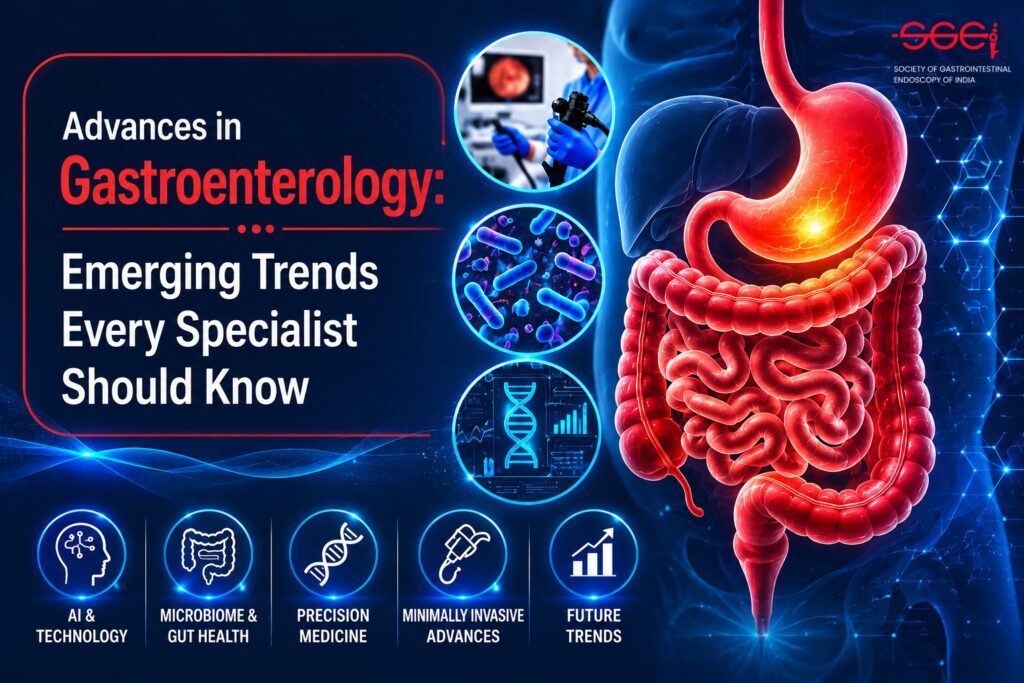
Gastrointestinal endoscopy has evolved significantly over the past few decades. What was once primarily used as a diagnostic procedure has developed into a sophisticated field that combines advanced imaging, therapeutic interventions, artificial intelligence, minimally invasive techniques, and increasingly precise clinical decision-making.
For gastroenterologists and endoscopy professionals, staying updated is no longer simply an advantage it is an essential part of professional development. Continuous learning in modern endoscopy helps clinicians keep pace with evolving technologies, refine technical skills, understand emerging evidence, and provide high-quality patient care.
As endoscopic procedures become more advanced and specialized, the ability to learn, adapt, and continuously improve has become an important part of becoming a proficient endoscopist.
What Is Continuous Learning in Modern Endoscopy?
Continuous learning refers to the ongoing process of improving clinical knowledge, technical skills, decision-making abilities, and professional competencies throughout an endoscopist’s career.
Endoscopy is a practical discipline. Reading guidelines and research papers is important, but developing procedural expertise often requires a combination of:
- Hands-on training
- Observation of experienced endoscopists
- Simulation-based practice
- Workshops and live demonstrations
- Case discussions
- Peer-to-peer learning
- Conferences and scientific meetings
- Reviewing new clinical guidelines
- Learning about emerging technologies
- Regular assessment and feedback
This approach allows gastroenterologists to continue developing their capabilities even after completing formal medical training.
Why Is Continuous Learning Important in Modern Endoscopy?
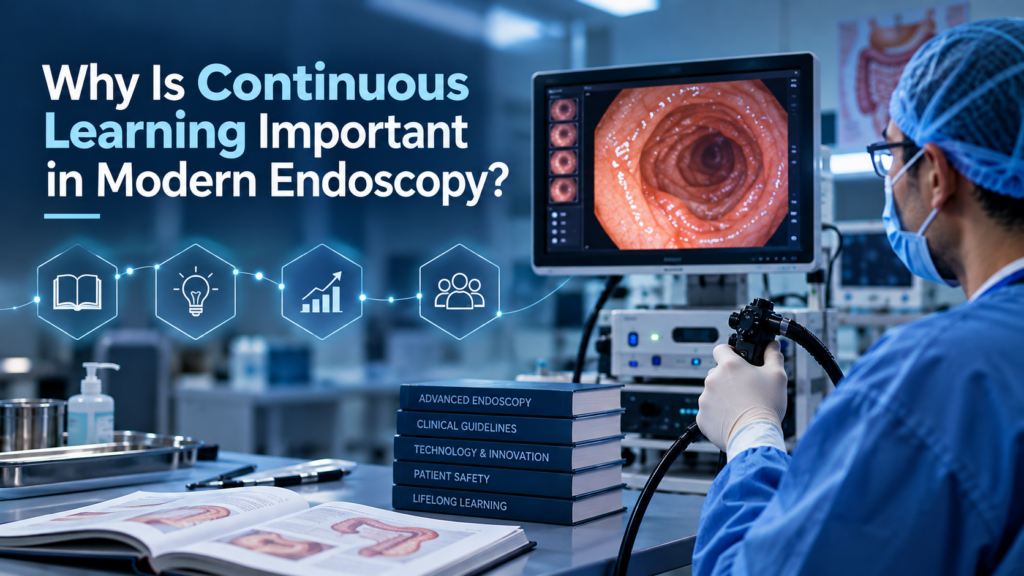
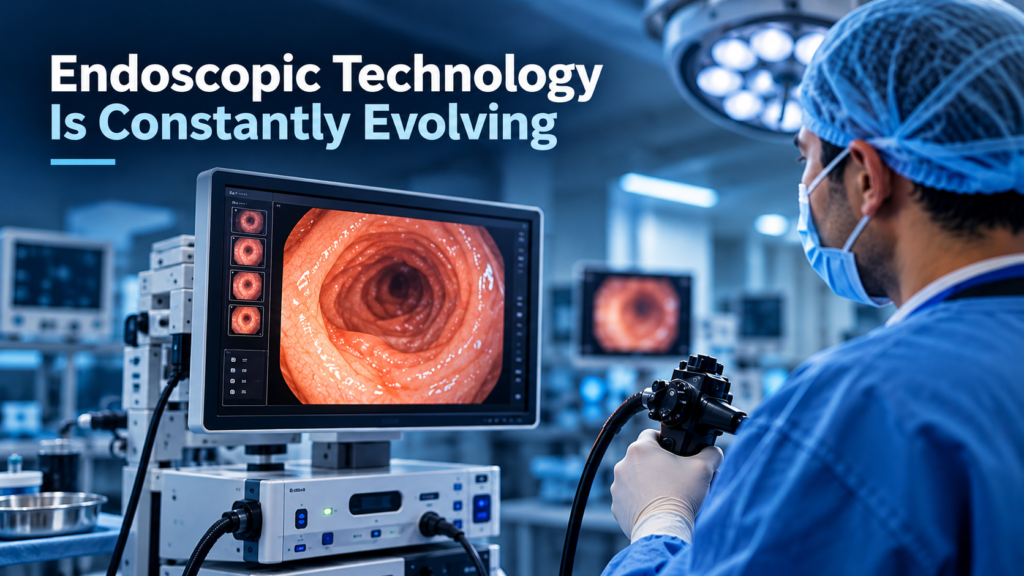
1. Endoscopic Technology Is Constantly Evolving
One of the biggest reasons for continuous learning is the rapid development of endoscopy technology.
Modern endoscopy systems offer increasingly sophisticated imaging capabilities, improved visualization, enhanced optics, therapeutic accessories, and digital technologies. Artificial intelligence is also being explored and implemented in areas such as lesion detection, characterization, quality assessment, and clinical decision support.
For an endoscopist, acquiring a new technology is only the beginning. Understanding how it works, when to use it, and how it can complement clinical judgment requires education and practical experience.
Continuous learning enables professionals to understand these developments and determine how they may fit into everyday clinical practice.
2. Advanced Endoscopy Requires Specialized Skills
Modern gastroenterology includes a wide range of advanced procedures, including endoscopic ultrasound (EUS), endoscopic retrograde cholangiopancreatography (ERCP), endoscopic mucosal resection (EMR), endoscopic submucosal dissection (ESD), peroral endoscopic myotomy (POEM), and other therapeutic techniques.
These procedures involve skills that go beyond basic diagnostic endoscopy.
Developing competence may require structured training, repeated practice, observation, mentorship, and feedback.
Continuous education provides opportunities for gastroenterologists to strengthen their skills and progressively move from basic procedures toward more advanced techniques.
3. Better Understanding of Current Guidelines
Clinical recommendations and guidelines continue to evolve as new evidence becomes available.
Recommendations related to screening, surveillance, biopsy techniques, polyp management, GI bleeding, colorectal cancer prevention, infection control, and procedural quality can change over time.
An endoscopist who regularly reviews current evidence is better positioned to understand these developments and incorporate appropriate recommendations into clinical practice.
Continuous learning therefore helps bridge the gap between emerging evidence and everyday patient care.
Continuous Learning and Endoscopy Quality
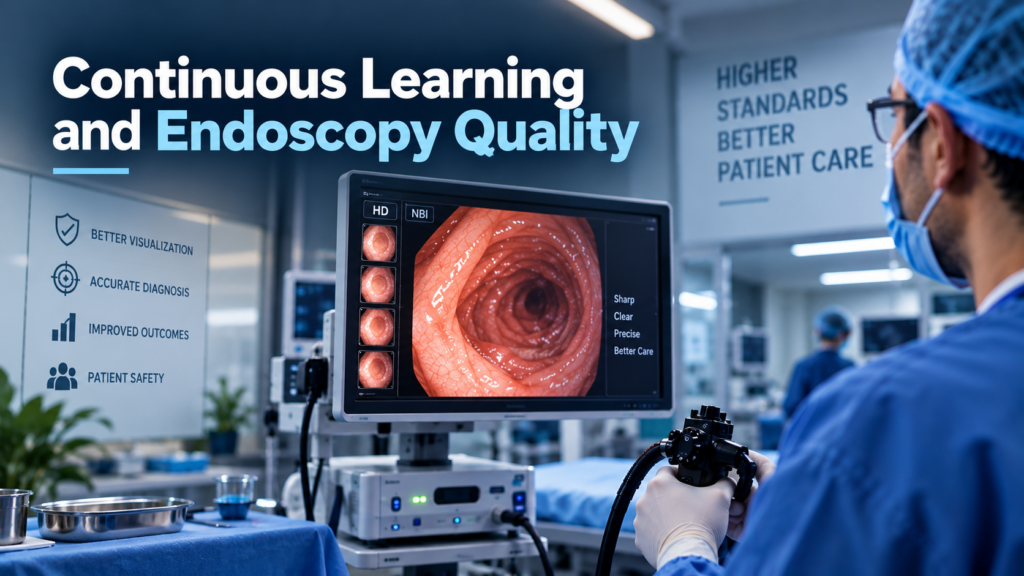
Quality in endoscopy is not determined by a single factor. It involves appropriate indications, adequate preparation, technical performance, careful examination, accurate documentation, appropriate intervention, patient safety, and follow-up.
Continuous learning can contribute to improvements across these areas.
For example, a gastroenterologist may learn new strategies for improving visualization, recognizing subtle lesions, reducing procedural complications, or improving documentation.
Quality improvement is therefore not a one-time achievement. It is an ongoing process.
Learning From Performance
Experienced endoscopists can benefit from reviewing their own performance as much as they benefit from learning new techniques.
Quality indicators and procedural outcomes can provide useful information about areas that may require improvement.
Regular review can encourage clinicians to ask important questions:
- Are procedures being completed efficiently?
- Is visualization adequate?
- Are important lesions being recognized?
- Are appropriate biopsies being obtained?
- Are complications being minimized?
- Is documentation complete?
- Are patients receiving appropriate follow-up?
This reflective approach can help create a culture of continuous improvement.
The Role of Hands-On Endoscopy Training
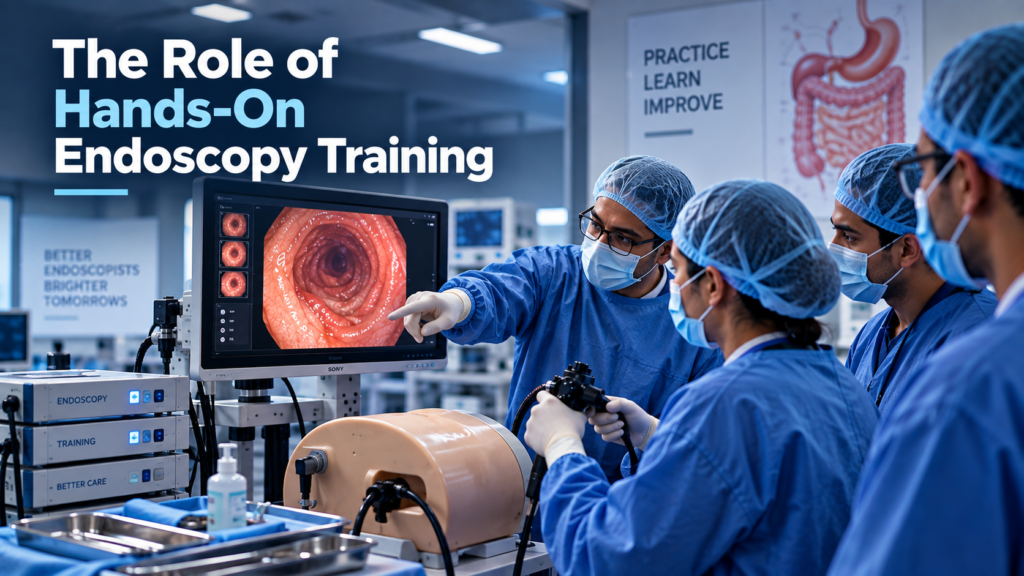
Endoscopy is a skill-based discipline, which makes hands-on education particularly valuable.
A textbook or video can explain a technique, but practical training allows learners to understand instrument handling, positioning, torque, scope control, tissue interaction, and procedural decision-making.
Hands-on workshops can provide opportunities to learn directly from experienced faculty and observe different approaches to challenging cases.
For young gastroenterologists, such training can help build confidence while providing exposure to techniques that may not be encountered frequently during routine clinical practice.
Simulation-Based Learning in Endoscopy
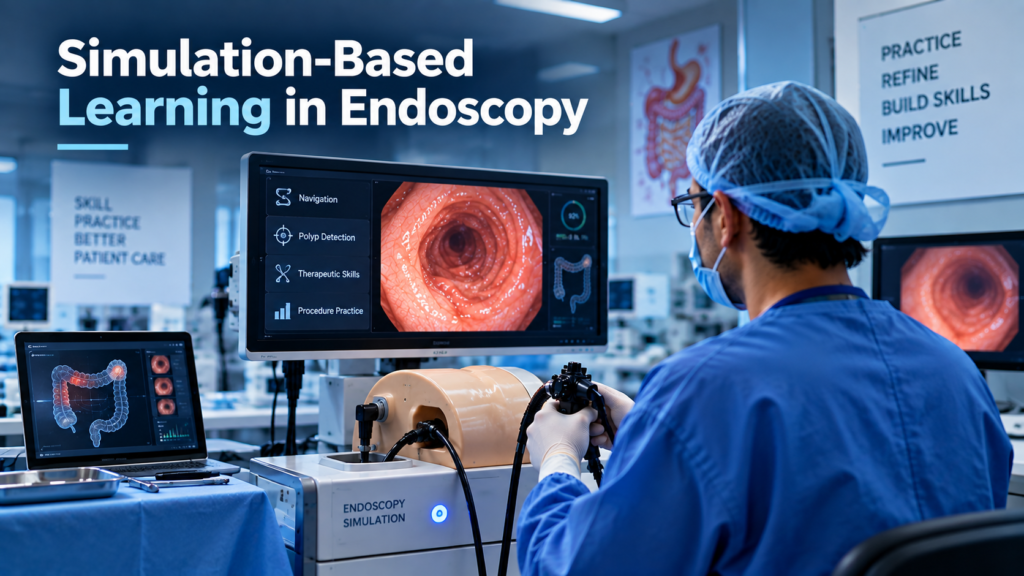
Simulation is another increasingly important component of endoscopy education.
Endoscopy simulators can provide a controlled environment where learners can practice technical skills without exposing patients to unnecessary procedural risks.
Simulation-based learning may help trainees develop:
- Scope navigation
- Hand-eye coordination
- Instrument control
- Spatial awareness
- Procedural planning
- Recognition of anatomical landmarks
- Management of simulated complications
It can also allow repeated practice. This is particularly useful because procedural learning often requires repetition before a skill becomes consistent.
Learning From Experienced Endoscopists
Mentorship remains an important part of professional development.
Experienced endoscopists can provide insights that are difficult to obtain from textbooks alone. These may include practical approaches to difficult anatomy, managing unexpected findings, choosing accessories, avoiding common technical mistakes, and deciding when to modify or stop a procedure.
Learning from peers also exposes clinicians to different procedural styles and problem-solving approaches.
A strong learning environment encourages professionals to ask questions, discuss difficult cases, and share experiences openly.
The Importance of Conferences and Scientific Meetings
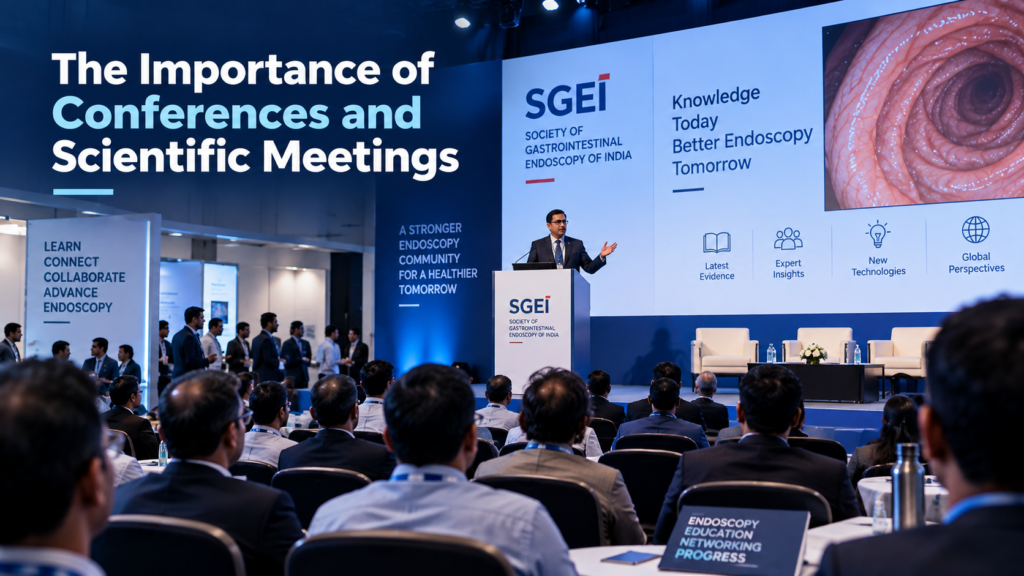
Scientific meetings provide another opportunity for continuous learning.
Conferences bring together gastroenterologists, endoscopists, researchers, educators, and industry experts. They provide a platform for discussing new research, technologies, techniques, guidelines, and clinical experiences.
For endoscopy professionals, participating in conferences can offer exposure to:
- Live demonstrations
- Expert lectures
- Case-based discussions
- Hands-on workshops
- New endoscopic devices
- Research presentations
- Emerging technologies
- Quality improvement strategies
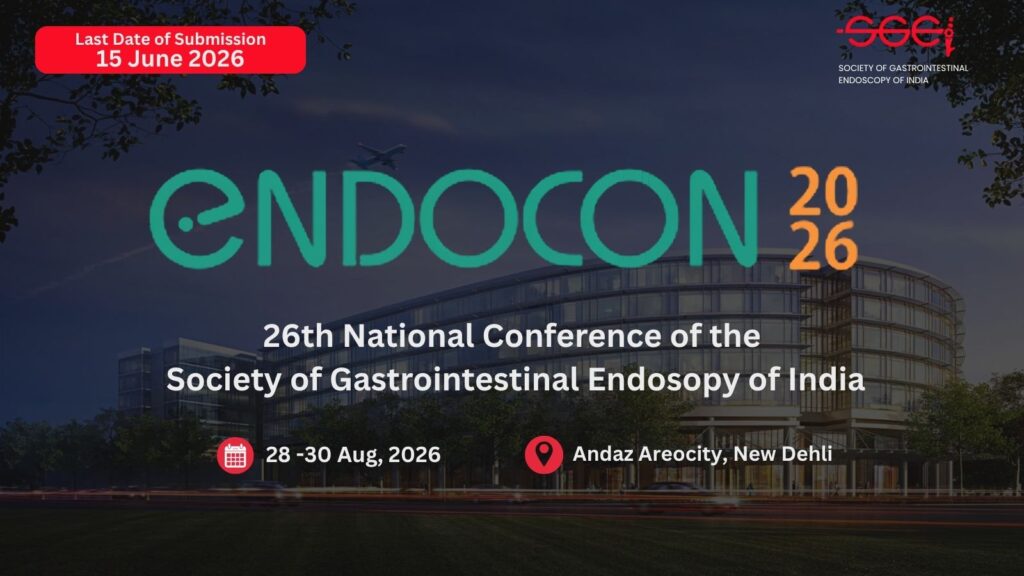
Organizations such as the Society of Gastrointestinal Endoscopy of India (SGEI) play an important role in creating opportunities for professional education, knowledge exchange, and endoscopy-focused learning.
Artificial Intelligence and the Future of Endoscopy
Artificial intelligence is becoming an increasingly important topic in modern gastroenterology.
AI-assisted endoscopy is being investigated for applications such as detecting colorectal polyps, identifying subtle lesions, assisting characterization, assessing procedural quality, and supporting clinical decision-making.
However, technology does not replace the need for clinical expertise.
Instead, endoscopists need to understand how AI tools work, their potential benefits, their limitations, and how their outputs should be interpreted in the clinical context.
As technology becomes increasingly integrated into endoscopy, continuous education will help clinicians use these tools responsibly and effectively.
Continuous Learning for Young Gastroenterologists
For young gastroenterologists, developing a habit of continuous learning early in their careers can have long-term benefits.
The learning process does not need to stop after completing formal training. Instead, it can become an ongoing professional routine.
Young endoscopists can consider building their learning around several areas:
Build Strong Fundamentals
Before moving toward advanced procedures, it is important to develop strong fundamentals in diagnostic endoscopy, anatomy, lesion recognition, scope handling, and patient safety.
Learn From Every Procedure
Each procedure can provide a learning opportunity. Reviewing challenging cases and discussing them with experienced colleagues can accelerate learning.
Attend Hands-On Workshops
Practical workshops can provide exposure to techniques, devices, and approaches that may not be available in routine training.
Follow Current Evidence
Regularly reviewing journals, guidelines, consensus statements, and high-quality educational resources can help clinicians remain informed.
Develop a Personal Learning Plan
Setting specific learning goals can make continuous education more structured.
For example, an endoscopist may choose to focus on improving lesion detection, colonoscopy quality, therapeutic techniques, EUS skills, or complication management over a defined period.
Continuous Learning and Patient Safety
Patient safety should remain at the center of endoscopy practice.
New techniques can introduce new opportunities but may also involve specific risks. Understanding patient selection, contraindications, procedural preparation, sedation considerations, infection prevention, and complication management is essential.
Continuous education allows endoscopy professionals to remain familiar with evolving safety recommendations and management strategies.
Learning about complications is particularly important. Understanding why complications occur and how they can be prevented may help clinicians make better decisions before, during, and after a procedure.
Learning Is Not Limited to New Procedures
Continuous learning does not always mean learning the latest advanced procedure.
Sometimes, improvement comes from refining existing skills.
An experienced endoscopist may benefit from learning better techniques for:
- Patient communication
- Procedure documentation
- Image interpretation
- Sedation practices
- Infection control
- Equipment handling
- Quality monitoring
- Team communication
- Post-procedure follow-up
Even small improvements can contribute to a stronger overall endoscopy service.
Building a Culture of Continuous Learning
Continuous learning becomes more effective when it is supported by the entire endoscopy team.
Hospitals and endoscopy units can encourage learning through:
- Regular case review meetings
- Quality improvement discussions
- Internal training sessions
- Peer feedback
- Simulation exercises
- Protocol updates
- Multidisciplinary discussions
- Continuing medical education programs
A learning culture encourages professionals to discuss challenges without hesitation and work together toward better outcomes.
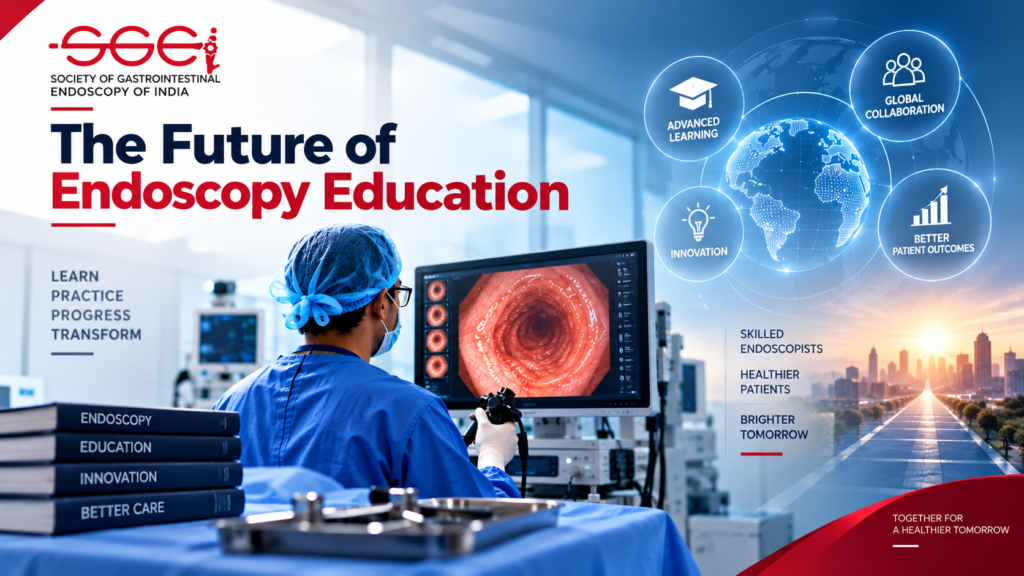
The Future of Endoscopy Education
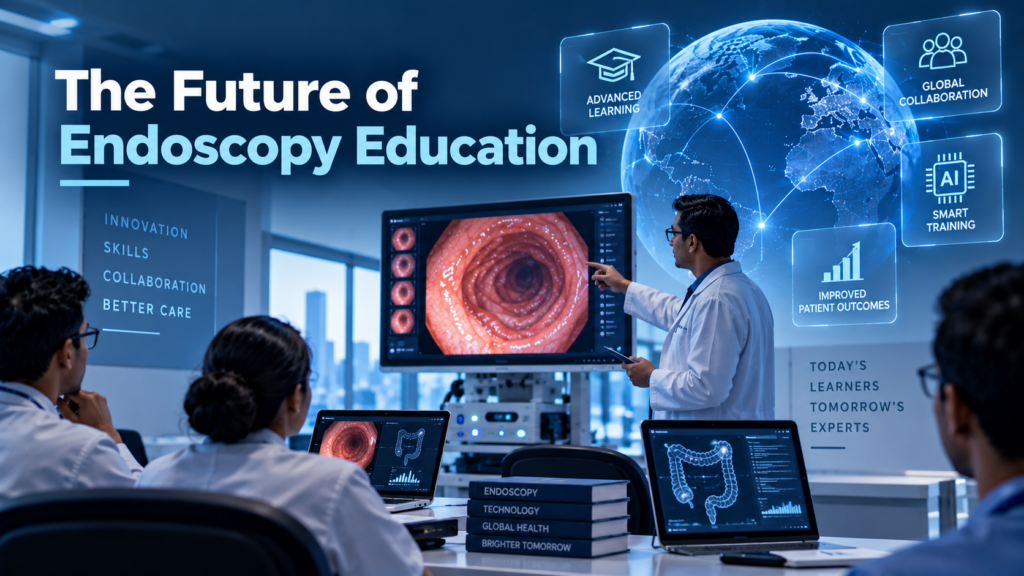
The future of endoscopy education is likely to become increasingly interactive and technology-driven.
Virtual learning, simulation, artificial intelligence, digital platforms, recorded procedures, remote mentorship, and advanced imaging technologies may provide new ways for clinicians to develop and maintain their skills.
However, technology will complement rather than eliminate the importance of experienced mentorship and hands-on practice.
The ideal learning model will likely combine digital education with practical experience, expert guidance, assessment, and continuous feedback.
Conclusion
Continuous learning in modern endoscopy is essential because the field is constantly changing.
New technologies, advanced procedures, evolving guidelines, artificial intelligence, quality standards, and patient-safety practices are reshaping gastrointestinal endoscopy. For gastroenterologists and endoscopy professionals, staying current requires a commitment to learning throughout their careers.
From hands-on workshops and simulation-based training to scientific conferences, peer learning, research, and regular review of clinical evidence, there are many ways to continue developing endoscopy skills.
For young gastroenterologists in particular, developing a mindset of continuous learning can help create a strong foundation for professional growth.
The future of endoscopy will not depend only on technological innovation. It will also depend on skilled professionals who are willing to learn, adapt, evaluate new evidence, and continuously improve their practice.
Continuous learning is therefore not simply a professional responsibility—it is an ongoing journey toward better endoscopy, stronger clinical expertise, and improved patient care.
Frequently Asked Questions
Why is continuous learning important in endoscopy?
Continuous learning helps endoscopists stay updated with new technologies, techniques, guidelines, safety practices, and evidence while continuously improving their procedural skills.
How can gastroenterologists improve their endoscopy skills?
Gastroenterologists can improve their skills through hands-on workshops, simulation training, mentorship, conferences, case discussions, peer feedback, and regular review of clinical evidence.
What role does technology play in modern endoscopy training?
Technology can support endoscopy education through simulation, artificial intelligence, digital learning platforms, recorded procedures, advanced imaging, and other interactive learning tools.
Is hands-on training important for endoscopy?
Yes. Because endoscopy is a practical, procedure-based discipline, hands-on training can complement theoretical knowledge and help clinicians develop technical and decision-making skills.
How can young gastroenterologists continue learning after formal training?
Young gastroenterologists can attend workshops and conferences, participate in professional societies, follow current guidelines and research, seek mentorship, review challenging cases, and create structured personal learning goals.
Join SGEI Membership
Stay connected with the evolving world of gastrointestinal endoscopy through the Society of Gastrointestinal Endoscopy of India (SGEI). Become an SGEI member to connect with fellow gastroenterology professionals, access learning opportunities, participate in scientific activities, and stay updated with developments in endoscopy.
Join SGEI Membership today: https://sgei.org.in/